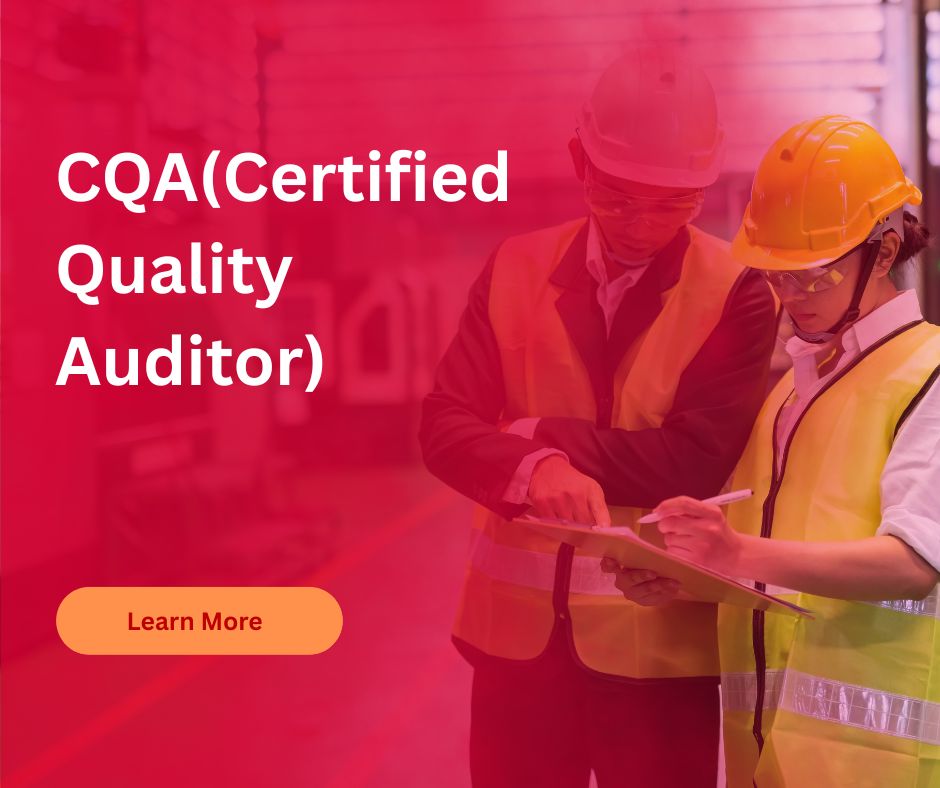
Elevate Your Quality Career with the ASQ Certified Quality Auditor (CQA) Certification
In today’s quality-driven industries, organizations rely heavily on skilled auditors to ensure that processes and systems meet stringent quality standards. If you are passionate about quality assurance, process improvement, and compliance, the ASQ Certified Quality Auditor (CQA) certification can be a game-changer for your professional growth.
What is the ASQ Certified Quality Auditor (CQA)?
The Certified Quality Auditor (CQA) credential, offered by the American Society for Quality (ASQ), validates your knowledge and skills in auditing quality systems. It demonstrates your ability to assess an organization’s quality management systems, identify non-conformities, and suggest improvements aligned with quality standards such as ISO 9001.
This certification is recognized globally and is ideal for quality professionals who want to build credibility and expertise in quality auditing.
Who Should Consider the CQA Certification?
- Quality Auditors and Inspectors
- Quality Managers and Engineers
- Compliance Officers
- Process Improvement Specialists
- Internal and External Auditors
- Consultants in Quality and Compliance
If your role involves conducting audits, evaluating quality systems, or ensuring compliance with regulatory standards, the CQA certification will enhance your skills and open doors to new career opportunities.
Key Areas Covered in the CQA Exam
The CQA exam covers a broad range of topics essential for effective auditing:
- Auditing Principles — Types of audits, auditor roles and responsibilities, and audit planning.
- Audit Process — Preparing audit checklists, conducting audits, and reporting results.
- Auditor Competencies — Communication skills, ethical behavior, and conflict resolution.
- Quality Tools and Techniques — Statistical process control, root cause analysis, and corrective/preventive actions.
- Quality Management Systems — Understanding ISO standards and other regulatory requirements.
- Audit Follow-up — Monitoring corrective actions and verifying effectiveness.
Benefits of Becoming a Certified Quality Auditor
1. Professional Credibility
Achieving the CQA credential shows employers and clients that you have a deep understanding of quality auditing standards and best practices.
2. Career Advancement
CQA certification can help you qualify for higher-level positions such as senior auditor, quality manager, or compliance specialist.
3. Improved Auditing Skills
You will gain advanced skills in identifying system weaknesses, assessing risks, and recommending practical improvements.
4. Global Recognition
ASQ certifications are internationally respected, enabling you to work across industries and borders.
How to Prepare for the CQA Exam?
- Study the ASQ CQA Body of Knowledge (BOK): Understand all the key domains covered in the exam.
- Enroll in Training Programs: Consider instructor-led or online courses designed specifically for CQA preparation.
- Use Practice Exams: Take mock tests to familiarize yourself with the exam format and improve time management.
- Leverage Work Experience: Apply real-life audit scenarios to reinforce your theoretical knowledge.
- Join Study Groups: Engage with fellow candidates to share knowledge and resources.
Exam Details
- Format: Multiple-choice questions
- Duration: 4 hours
- Number of Questions: Approximately 130
- Eligibility: Generally requires at least three years of work experience in quality auditing or related fields.
Final Thoughts
The ASQ Certified Quality Auditor certification is an excellent investment for quality professionals committed to excelling in auditing and compliance. It not only validates your expertise but also empowers you to drive meaningful improvements within your organization.
If you’re ready to take your quality career to the next level, the CQA certification is the perfect stepping stone to becoming a trusted quality leader and auditor.